"Have you sold tech before?"
Eight years recruiting salespeople. More than 400 placed. And no industry asks that question harder than tech.
If the answer is no, a lot of hiring managers stop listening. Which gives you the best catch-22 in the business. You need tech sales experience to get a tech sales job. You need a tech sales job to get tech sales experience.
Some sales leaders will defend it. Tech moves fast, the product is complex, the buyer is sophisticated, so they want guarantees. If you've sold tech, you're in. If you haven't, you're "too traditional" and "not sophisticated enough" for their environment.
If you ask me, that's a load of BS. Plenty of people outside tech sell stuff way more complicated than a SaaS subscription:
- Aerospace. Selling full-flight simulators to airlines or a business jet to a corporate buyer means multi-year cycles with engineers, finance, and regulators in the room.
- Institutional financial products. Selling structured products or private credit funds means explaining risk to people who model risk for a living.
- Industrial manufacturing. Selling an automation retrofit for a production line means talking uptime, integration, and ROI with a plant manager who doesn't trust you yet.
- Medical devices. You're in the OR, the surgeon is watching, and the hospital procurement committee is next.
Those reps know complex. The bias is still real, so let's work with it.
Three scenarios. Find yours.
First, in every scenario: be ready to take a step back
Whatever bucket you're in, there's a good chance you'll take a step back to get your foot in the door.
- Sold to large accounts in a traditional industry? You might start on SMB or mid-market in tech. Smaller deals, faster cycles, more volume.
- Were you a closer? You might start as a BDR.
- Your base might dip for a year or two.
That's OK. It's temporary if you perform. Hit your number a few quarters in a row and the conversation about moving up starts on its own.
Leave the ego at the door. It's the most expensive thing you can bring to this move.
Scenario 1: You're fresh out of school
This one is tricky because of how the market works right now. Companies want guarantees, and a new grad has none to show.
So yes, your next role is a BDR role. Your entry points:
- BDR or SDR internships and co-op programs
- Rotational programs that move you through finance, marketing, then sales
- New-grad programs at big tech companies
Once you're in that hot seat, it's game on. Your numbers will do the talking.
It's probably the easiest way into tech sales. You don't have much to lose yet. You can grind, make mistakes, and learn the craft without much damage to your personal life.
You have two routes.
Route A: the big shop. Salesforce, HubSpot, and the like. At this stage, training is everything you're looking for, because you pretty much know nothing. That's OK to say out loud. Salesforce ran an SDR Apprentice (New Grad) track through its Futureforce program for 2026 starts: structured enablement, mentorship from senior SDRs, shadowing, and a path into a full SDR seat within 3 to 4 months. HubSpot's BDR program has three levels, from prospecting all the way to full-cycle closer, with base and commission going up at each promotion. Expect 60 to 100+ activities a day. Competition for these seats is brutal, so apply early and apply every cycle.
Route B: the local tech company. A 40-person SaaS company in your city. Better odds of getting hired. More chaos. Nobody will hold your hand, so you'll do a lot of your own enablement at night. The upside: you touch everything and you get noticed fast.
A word on BDR boot camps. In five years running a sales recruiting agency, I've seen zero correlation between boot camps and the quality of the people I interview. Plenty of candidates with very little sales experience landed roles faster than boot camp grads. They were more polished, hungrier, sharper, better prepared, and they knew more about prospecting. Boot camps can work. They just shouldn't be the first thing you do.
Try this instead. Reach out to a company directly and pitch them: "Take me for a four-week trial. Train me on your stuff, give me a phone and a laptop, and let me do my thing." You're prospecting your own job. This works a lot better with SMB-focused companies, where a founder or a sales manager can say yes on the spot. And from there, it's game on.
Whichever route you take, the interview has to show three things: proactivity, hustle, and that you already speak the language. ICP, pipeline, ACV, discovery, MEDDICC. If those mean nothing to you today, fix that before your first call.
Read:
- Fanatical Prospecting, Jeb Blount. The go-to book on keeping your pipeline full.
- Cold Calling Sucks (And That's Why It Works), Armand Farrokh and Nick Cegelski. Word-for-word frameworks for the openers and objections you'll hit on day one.
- Gap Selling, Keenan. How to run discovery that finds the real problem.
- Predictable Revenue, Aaron Ross. The outbound playbook built at Salesforce that shaped the modern SDR role.
Listen: 30 Minutes to President's Club, the podcast from the Cold Calling Sucks authors. Real reps breaking down real calls.
Follow: you're going after a BDR role, so learn from the people who teach outbound and run BDR teams.
- Josh Braun: cold emails and calls that don't sound like a salesperson wrote them
- Jason Bay: outbound frameworks, founder of Outbound Squad
- Morgan J Ingram: SDR career content and video prospecting
- Florin Tatulea: daily, very tactical prospecting posts
- The leaders on SDRLeader.com's Top 25 SDR Leaders list. These are the people who'll be hiring you.
Free certifications: Salesforce Trailhead and HubSpot Academy. They cost nothing and show you did the work before anyone asked.
Scenario 2: You already sell, just outside tech
To me, this is the second easiest. You already know how to prospect, run a deal, and take a no. Your job now is to show the overlap between your world and theirs.
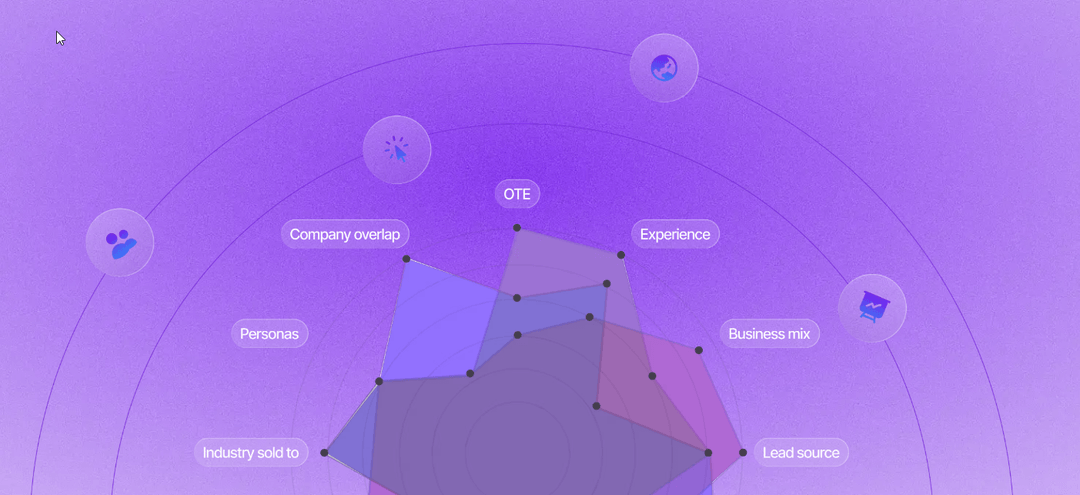
Overlap can come from:
- Segment. SMB, mid-market, enterprise. Same tier, same muscles.
- Deal size. A $40K deal in industrial supplies and a $40K SaaS deal look a lot alike on a forecast.
- Sales cycle. If you've run 6-month cycles with multiple stakeholders, say it with numbers.
- Personas. CFO, IT director, plant manager, HR leader. If their buyer is your buyer, that's your headline.
- ICP. Same industry, same company size, same region.
- Motion. Full cycle, outbound, new logos, expansion.
- Tools. Salesforce, HubSpot, Outreach, Gong, Sales Navigator.
Example: you sell group benefits to mid-market CFOs. A payroll or HR tech company selling to the same CFO should be at the top of your list. Same buyer, same budget conversation, same objections.
Put it on one page before the interview. Their job post on the left, your track record on the right. Draw the lines yourself so the hiring manager doesn't have to.
Then there's AI. Every tech company out there wants AI-forward reps. Selling med devices doesn't stop you from being one. Do the research. Grab a couple of trials: Clay or Apollo for prospecting, ChatGPT or Claude for account research and call prep. Check out the trends in their space. Build a short prospect list for the company you're interviewing with and bring it.
Come in prepared.
Scenario 3: You're switching careers into sales
I'm going to be real. This is the toughest one.
You started your career outside sales, you have a few years under your belt, and now you want sales. Tech sales, specifically. Two problems:
- You won't read as the young and hungry type. Your years of experience work against you here.
- You'll have to explain why sales is suddenly your calling.
I hear it from clients all the time. For BDRs, they want young and hungry. For AEs, they want proven and still hungry.
So flip the script. Use those years.
- You're process-oriented. You've lived with deadlines, KPIs, and systems.
- You're stable. You won't burst into flames three weeks in because your last job bored you and this one is hard.
- You know the business codes. You can sit across from a director and not look lost.
- You're polished. You can write an email without mistakes. You'd be surprised how rare that is.
- The phone doesn't scare you. You've already dealt with angry customers, tough stakeholders, bad news.
You present a lot more guarantees than the new grad who pretty much knows nothing. Say it exactly like that.
Two more things.
Have your why ready. One specific story. The accountant who kept getting pulled into client meetings because she could explain the numbers. The teacher who ran parent nights for 30 families. The paralegal negotiating with opposing counsel every week. Something real that shows you've been selling without the title.
Target companies that sell into the industry you come from. An ex-nurse selling healthtech. An ex-accountant selling fintech. An ex-teacher selling edtech. You already speak the buyer's language, and that's a shortcut most candidates don't have.
And yes, you'll most likely start as a BDR. Own it.
The short version
- Fresh grad: go BDR, chase training, learn the lingo before your first interview, and prospect your own job.
- Salesperson from another industry: map the overlap and show up AI-forward.
- Career changer: turn your years into guarantees and target companies that sell into the industry you know.
- All three: be ready to take a step back to get in.
Tech sales hiring managers want proof. Give it to them. That's why you should have a presence on TrackRec: a verified sales track record that shows your numbers, whatever industry they came from.
Happy hunting.